
Separate the Three Burnett County Property Value Figures
Burnett County property records can show three distinct figures for one parcel. One is the assessed value. Another is a market or full-value reference. The third is the consideration stated in a recorded deed. Not every search result displays all three together in Novus or TTech/Ascent, so treat each value as a separate fact to verify at its source.
| Value | What It Is | Where |
|---|---|---|
| Assessed value | Roll amount for an assessment year | County real-estate parcel result |
| Market or full value | A valuation estimate if the record or DOR comparison shows one | Assessor or Wisconsin DOR material |
| Sale consideration | Amount reported with a recorded transfer, when stated | Register of Deeds instrument |
| Land and improvements | Separate components where the roll exposes them | County assessment result |
An assessed value feeds the tax process. It does not predict a sale price. A deed's consideration figure documents one transaction, and it is not a licensed appraisal. Wisconsin DOR publishes equalized and full-value material for assessment context, though no current Burnett-specific ratio or revaluation narrative appears in it.
Look Up the Burnett County Assessment by Parcel
Start in the county's public-access real-estate system. Find the parcel first. Then review its assessment fields. The legacy search accepts a site address, owner name, Tax ID, Alt./Legacy ID, or segmented PIN. During the 2026 transition, the county directs current parcel information to TTech/Ascent, while Novus stays available for historical tax bills and receipts. Record the year and parcel key along with each amount so you compare like records.
- Start from the county Property Tax Search page and follow its current real-estate link.
- Find the parcel by address or PIN and retain its Tax ID or legacy identifier.
- Read the land, improvement, total, and assessment-year fields that the record actually shows.
- For sale evidence, locate the recorded transfer and read the consideration stated in that instrument.
- Compare similar parcels and years only after checking location, land mix, and description.
The official Burnett County Property Tax Search page identifies the current and historical paths:
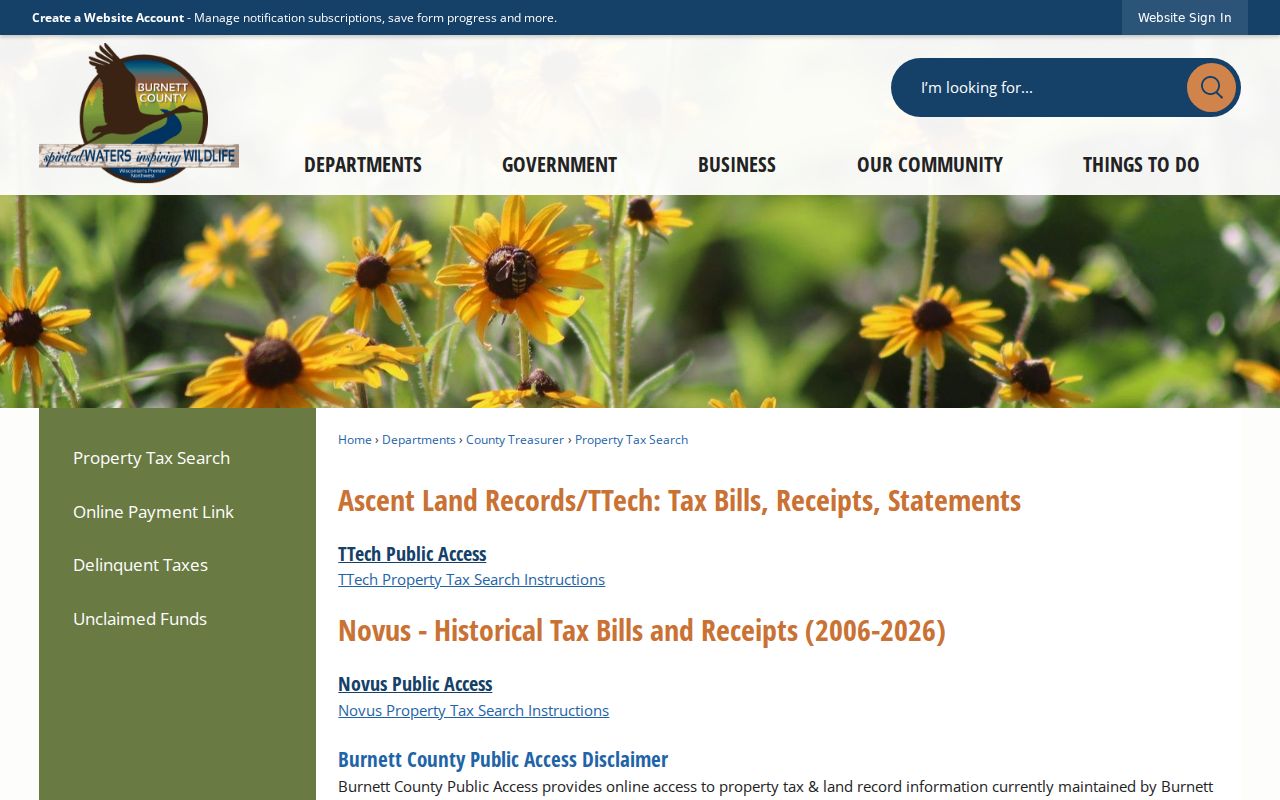
The parcel record holds the assessment fields. The Treasurer's historical bill route covers a year-specific bill or receipt. A bill total can exceed the assessed amount. It is a tax calculation for a set period. Keep assessed value, equalized context, sale consideration, and amount due in separate columns. That habit keeps one figure from being mistaken for another.
- Assessed value
- A county roll amount for tax administration.
- Market value
- A sale-oriented estimate, not necessarily shown in the parcel result.
- Consideration
- The transaction amount reported with a recorded transfer.
- Assessment level
- A ratio comparison; a Burnett-specific current ratio was not confirmed.
Know What a Burnett County Assessed Value Cannot Say
A tax-roll amount cannot tell you what a parcel would sell for today. It says nothing about a building's condition. It cannot set the price a buyer would accept. The county warns that its public data may be inaccurate, out of date, or incomplete, and a value may reflect a different assessment year than a recent sale. For a purchase, financing, or legal matter, bring in a qualified appraiser or the right professional. Rely on the record for what it states.
Value vs price. A Burnett County assessment is for the tax roll and is not an appraisal of a likely sale price. Use recorded consideration as transaction evidence and a licensed appraisal when a market valuation is needed.
Compare Burnett County Land and Improvement Amounts
Where the county result breaks out land and improvement values, keep both parts beside the total and its assessment year. A lakeshore parcel, wooded tract, village home, and rural parcel carry different land-to-building mixes. A total hides that mix. An improvement amount is not a structure inspection.
Not every parcel page labels every field. Ask which roll record supports an amount. The Property Information Division or assessor can explain. Keep the parcel PIN and year on hand when you request a correction or clarification.
Check Burnett County's Assessment Level Before Comparing Values
Wisconsin DOR publishes equalized and full-value assessment information. It covers county and district context. Burnett County's current assessment ratio, level-of-assessment statement, and last revaluation year are not published there. Do not borrow a ratio from another county.
Match the year and the value type first. A roll amount, equalized value, market estimate, and sale consideration are not interchangeable. Each answers a different question. Ask the local assessor which notice or valuation record applies to a specific assessment.
Wisconsin's equalized-value figures offer a common framework across jurisdictions. They are not a parcel appraisal. The framework is for areas, not individual parcels. No official village-level trend or countywide revaluation schedule is published. A defensible comparison needs the assessment year, tax district, parcel characteristics, and relevant recorded sale documents, with assumptions stated rather than guessed from a town's population change.
Use a Burnett County Deed for Recorded Sale Evidence
A recorded transfer can supply a date, named parties, an instrument reference, and consideration when that amount is stated. The deed index and image are the county route. Coverage dates differ between the county's own sources. The Register of Deeds page says portal records begin in 1963, while the Laredo agreement says 1968 and back-indexing continues. Ask the office about older index books.
A recorded sale is one transaction under its own conditions, not a professional opinion of current market value. Check the legal description and parcel key first. The county's online tax disclaimer cautions against treating a public record as complete or current. Match each deed amount to its parcel.
Keep Burnett County Value Research Separate From the Tax Bill
The property-value question ends with what the numbers mean and where they sit. The bill itself is a different matter. Payment history, exemptions, and delinquency belong to the Treasurer, not the assessor's valuation. Burnett County stores historical tax bills and receipts in Novus from 2006 through 2026. Parcel lookup shifts toward TTech/Ascent. Need the amount due or a payment record? Use the separate Burnett County property tax records guide. A bill total reflects tax administration, not a sale price or an appraisal. Keep the assessment value and the tax account in separate columns.
A bill is not an appraisal. Burnett County publishes no single filing deadline for assessment reviews. No universal appeal sequence applies. Check the notice for the applicable assessment year. Then ask the assessor about the administrative process open to you. Save the notice, comparable parcel details, and supporting sale evidence. Confirm the current deadline with the responsible office before relying on any generic date.
Build a Burnett County Value Trend From Comparable Records
Burnett County publishes no official village-level revaluation story. No fast-appreciating district appears in county sources either. So skip local trend claims built on population alone. A grounded comparison starts with similar parcels. Note the land and improvement split. Match the assessment year. Verify recorded sale dates and descriptions. County assessment rolls and Wisconsin DOR equalized or full-value reports are the supported starting sources for a Burnett County property search of this kind.
Beacon helps locate nearby land and district context. The map itself establishes no value. Location still shapes comparability. A lakeshore, forest, village-center, or rural road parcel may not be a fair match for another. Record the reason for each comparison, then ask an appraiser or assessor about differences the public fields cannot explain.
For every sale used as a comparison, save the deed recording reference, transaction date, legal description, and any stated consideration. Check whether a later correction or transfer altered the parcel description. Never compare a tax-deed listing against an ordinary arm's-length sale. The register's stated portal coverage differs between its public page and the Laredo agreement, so older deed records may require an office request rather than an online search.