
Find Who Owns a Burnett County Parcel by Following the Record
The dependable Burnett County path runs from address to parcel to owner field to deed. The legacy public-access system searches by site address, owner, Tax ID, Alt./Legacy ID. It also searches by segmented PIN. Its owner-name and mailing-name lines are helpful. But a newly recorded deed can postdate the periodic tax roll. Hang onto the PIN. It keeps the tax result, the GIS parcel, and the deed description aligned. Follow that order for any property search here.
- Search the site address in the county real-estate record and open the matching parcel.
- Write down the owner/mailing name, situs, PIN, Tax ID, and legacy identifier if shown.
- Search the Register of Deeds for the latest instrument and compare its grantor, grantee, and legal description.
- If the grantee is an entity, check the Wisconsin DFI entity record for its registered-agent information.
- Use the county's official contact route if a recent transfer or unclear name needs confirmation.
Compare Burnett County Owner Sources Before You Decide
Several Burnett County records can name a person or entity. Each plays a different role. The assessor's tax-real-estate report carries the owner and mailing line. The recorded deed identifies the parties to an instrument. Beacon helps you locate the land and its parcel key. Wisconsin DFI can identify a business entity and its registered agent. It cannot confirm every person holding an interest in the company.
| Source | Owner Info It Gives | Access |
|---|---|---|
| Novus / TTech tax-real-estate record | Owner-name and mailing-name line | Public county search; data disclaimer applies |
| Register of Deeds | Grantor and grantee on a recorded instrument | Tapestry EON or Laredo; office request |
| Wisconsin DFI | Business entity and registered-agent record | Separate public entity search |
| Beacon GIS | Parcel location and mapping context | Public map viewer; not a title source |
An owner of record in Burnett County is not always the occupant or manager. The owner may list a different mailing address. Or the owner may hold the land through a trust, LLC, estate, or personal representative. Public property records do not establish where a person currently lives. Nor do they reveal a private relationship to the parcel.
Start with the county parcel roll when you have an address or tax key. Move to the deed index when you need the name tied to a recorded transfer. Novus offers first-name, last-name or organization, site-number and road, Tax ID, Alt./Legacy ID, and segmented PIN fields. Try a known organization spelling along with a person's name. Then compare results by PIN and legal description. That step prevents mixing up two same-name owners. It also keeps an entity entry from slipping past your deed records search.
Know What a Burnett County Owner Lookup Cannot Establish
No property-owner lookup proves who lives at a situs address. It will not reveal every trust beneficiary, either. Nor can it certify that title is free of claims. Wisconsin's records law generally permits access to public records. But confidentiality statutes and the legal balancing test still apply. Some addresses are protected through programs such as Safe at Home. Rely on the deed, title work, and custodian confirmation. Each was designed to answer a different question.
Lawful use. Use Burnett County owner records for property research, due diligence, and civic review. Do not use names or mailing details to stalk, harass, or harm anyone.
Confirm a Burnett County Owner After a Recent Transfer
Burnett County publishes no precise closing-to-roll lag and no parcel-roll refresh date. A recently signed or recorded transfer may show up in the Register of Deeds first. The tax-real-estate result can lag behind. When names differ, compare the instrument recording date, parties, PIN, and legal description. Do that before trusting either entry as current.
The county cautions that its public-access data may not be current, correct, or complete. A transfer that just closed calls for the recorded deed. That deed is the more direct evidence of what was filed. If timing matters to a county record request, ask the Property Information Division. Staff can say when the owner line should refresh.
In the deed portal, search the person or organization as both grantor and grantee. Cover the relevant date range. A grantor conveys an interest. A grantee is the named recipient in the instrument. Neither label alone proves complete present title. A release, correction, probate instrument, or later transfer can change how an earlier result reads. Keep every document number and date beside the parcel PIN. That keeps the chain checkable in order.
The distinct current-owner guide digs into the present owner-of-record field and this timing question.
Separate Burnett County Situs and Mailing Names
The situs is where the land sits. The mailing address is where tax correspondence goes. A Burnett County parcel owner can have a mailing address outside the county, a post-office box, or an entity address. Neither the distance nor the difference between those fields says who occupies the property.
This distinction matters most where postal city and municipal boundary diverge. A Grantsburg, Siren, or Webster mailing line does not prove the parcel lies within that village. Check the municipality or tax district in the record. Then anchor the property search with the PIN.
- Owner of record
- The name shown on a county roll or recorded instrument for its specific purpose.
- Grantee
- The recipient named in a recorded transfer instrument.
- Situs
- The physical location assigned to the parcel.
- Mailing address
- The location used for tax or owner correspondence.
Resolve Burnett County Trust, LLC, and Estate Names
Burnett County land records often list an owner of record under an LLC, trust, trustee, estate, or initials rather than the person's everyday name. Novus accounts for that. Its index takes a last name or organization field. Search likely organization forms as well as the person. Then compare each result's legal description and mailing address against the parcel record. For a same-name result, the PIN, instrument date, and legal description work as tie-breakers. Do not merge records just because names match.
Wisconsin DFI's corporate search can add a business filing and a registered-agent record. It is not a substitute for the deed. It cannot necessarily name all members, beneficiaries, or people who use the property, and an estate transfer may require the circuit-court probate file to explain a representative's authority while the deed shows the real-estate instrument that was recorded.
Monitor Burnett County Filings With a Fraud Alert
The Register of Deeds links a free Property Fraud Alert service covering Burnett County names. Subscription is by name. It watches land-record activity under subscribed names. It can flag a filing quickly. The alert does not verify the transaction, determine who owns the property, or substitute for checking the recorded instrument itself. When an alert arrives, check the parcel record. Match the document number, parties, recording information, and legal description. Contact the Register of Deeds about a filing that appears wrong, and keep the search lawful and focused on a property question rather than on locating or contacting an occupant.
Respect Wisconsin's Protected Address Limits
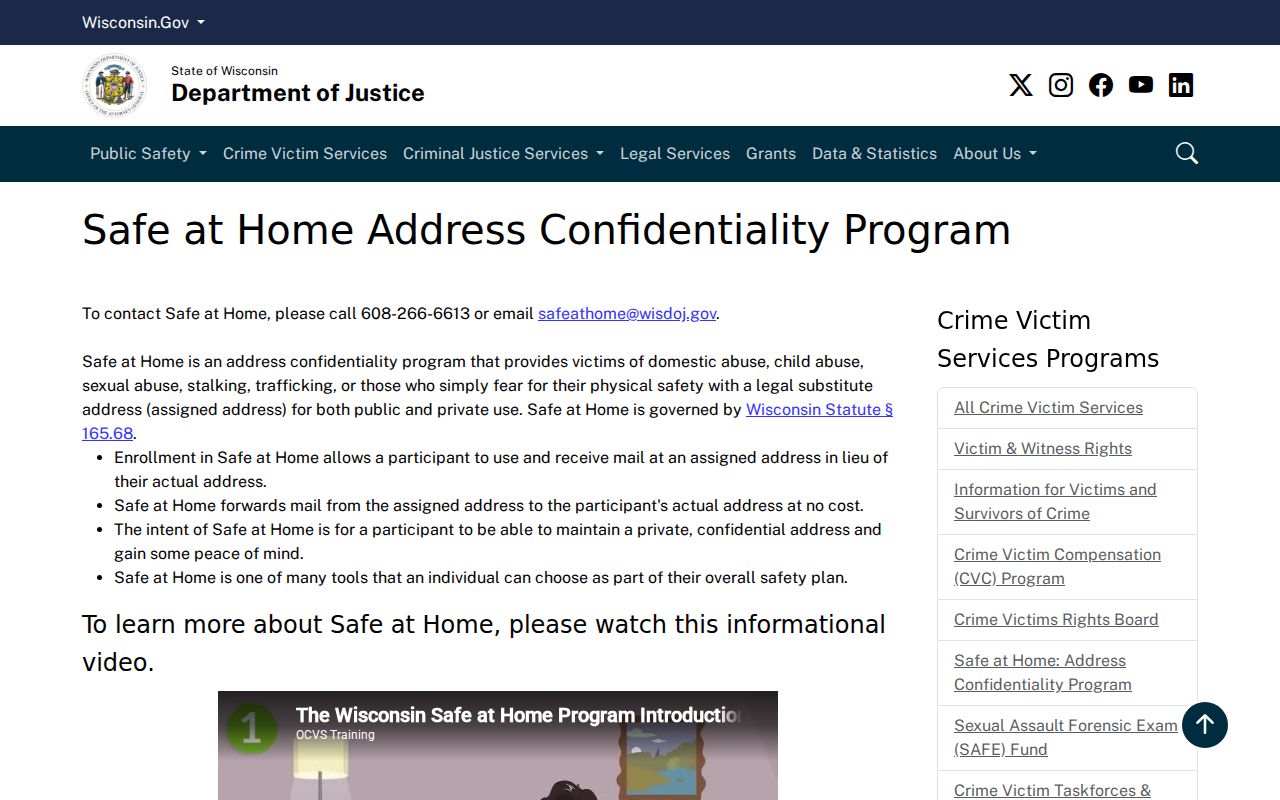
Wisconsin Safe at Home gives eligible people who fear for their safety a substitute address and mail forwarding. The participant's actual address stays confidential. Statutory, court, and law-enforcement exceptions apply. Wisconsin also runs a confidential-voter program that can affect voter records. That is why a public parcel result should never be treated as a complete directory of people connected with land in Burnett County.
A public-record request runs through Wisconsin Public Records Law. Send a precise request to the custodian. The office must weigh confidentiality statutes and the balancing test. Property research does not override a protected-address rule. An absent personal address is not evidence that a tax record is incomplete.
The Wisconsin DOJ Safe at Home program page describes the substitute-address approach:
Use an address only for the parcel-record purpose it was provided for. A record may omit an actual residence. Never infer it from mailing details or unrelated databases. A lawful request names the document or record sought. Let the custodian apply the governing access and privacy rules.
Wisconsin Public Records Law, Wis. Stat. §§19.31-19.39, covers records held by public authorities. Confidentiality rules and the balancing test still matter. No fixed statewide deadline governs every request. The authority should respond as soon as practicable and without delay. Copying charges stay limited to actual, necessary, direct costs. A request about an owner line should name the parcel and record period rather than ask a public office to identify a person or disclose a protected address.